AI Agents for Enterprise 2026: Complete Implementation Guide (Strategy, Costs, ROI, Timeline)
NovaEdge Digital Labs
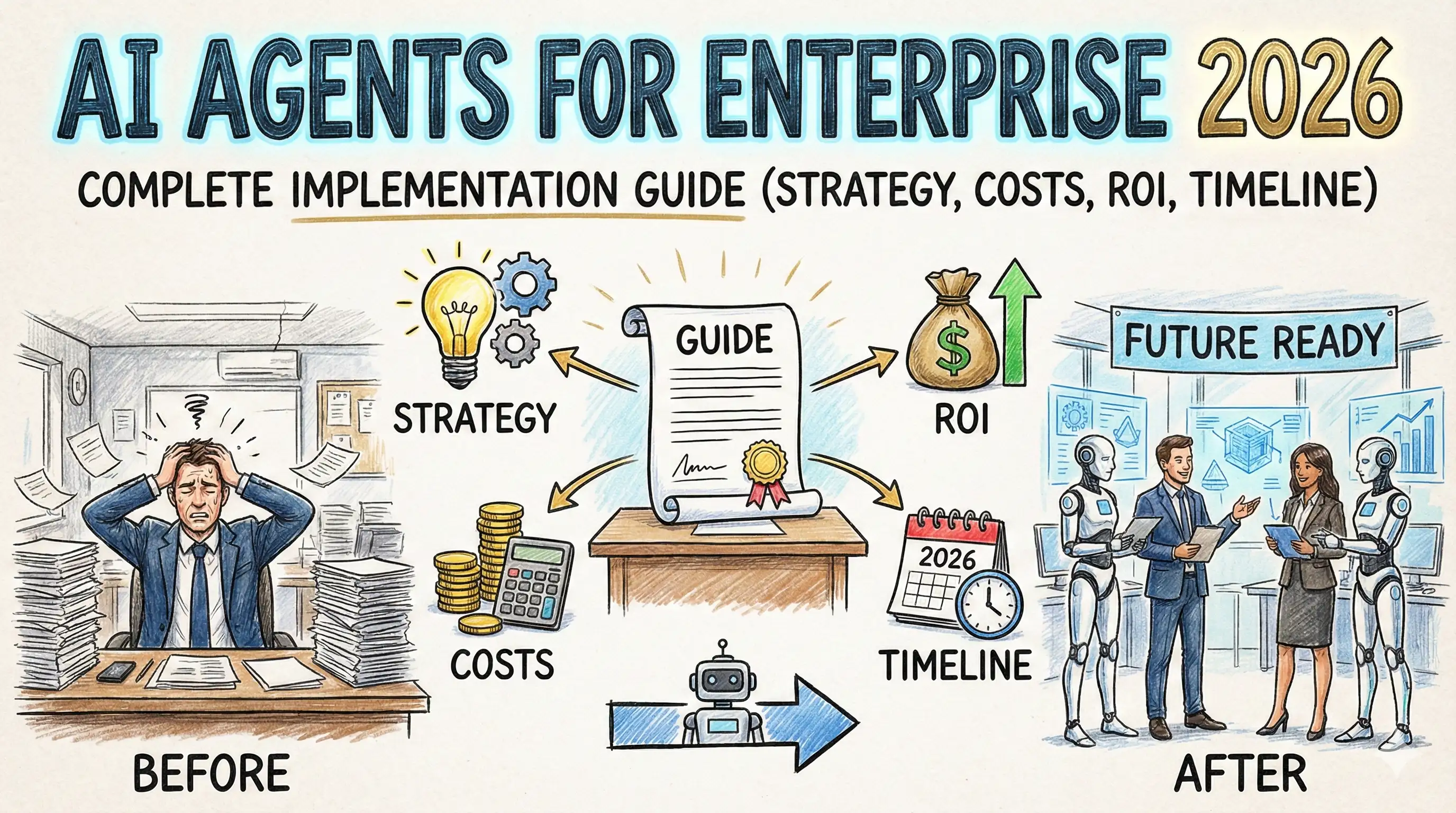
79% of companies are deploying AI agents. Complete guide to enterprise AI agent strategy, implementation, costs, and ROI. Learn why 2026 is the inflection point and how to move from AI experimentation to production deployment at scale.
The question in boardrooms has shifted.
Two years ago: "Should we explore AI?" Last year: "What's our AI strategy?" Today: "When will our AI agents go into production?"
If you're not being asked this question yet, you will be. Soon.
Here's why: AI agents aren't experimental anymore. They're production-ready, ROI-positive, and your competitors are already deploying them.
The Numbers Tell the Story
- 79% of organizations have adopted AI agents to some extent (PwC 2025)
- 40% of enterprise applications will have embedded AI agents by end of 2026 (Gartner)
- 282% year-over-year increase in AI adoption
- Market growing from $7.6B (2025) to projected $50B (2030)
- 35% of companies report broad AI agent usage already
- 60% say AI boosts ROI and operational efficiency
- 55% report improved customer experience and innovation
But here's the critical insight that most executives miss:
Most of that 79% are stuck in pilot hell.
They've built proof-of-concepts. They've run experiments. They've demonstrated technical feasibility. But they haven't achieved production deployment at scale.
Why? Because building an AI agent demo is easy. Building an enterprise-grade AI agent system that delivers measurable business value is hard.
Real-World Results
Danfoss (Global Manufacturing): Automated 80% of transactional purchase order decisions. Response time reduced from 42 hours to near real-time. Impact: $15M annual savings, 95% accuracy maintained. Payback: 6 months.
Telus (Telecommunications): 57,000 employees using AI agents daily. Time saved: 40 minutes per interaction. Total productivity gain: 38,000 hours monthly. Annual value: $22M.
Suzano (Manufacturing): 50,000 employees accessing AI-powered knowledge agents. Query response time: Hours → Minutes (95% reduction). Innovation impact: 30% faster problem-solving.
What Are Enterprise AI Agents?
Enterprise AI Agents are autonomous software systems powered by large language models (LLMs) that can:
- Understand complex business objectives and context
- Make decisions based on company policies and data
- Take actions across multiple systems without human intervention
- Learn and improve from outcomes
- Operate 24/7 at scale
- Integrate with existing enterprise applications and workflows
The Three Types of Enterprise AI Agents
Type 1: Task Automation Agents - Execute repetitive, rules-based tasks. Examples: Invoice processing, ticket routing, data entry. ROI: 40-70% cost reduction. Implementation: 6-12 weeks.
Type 2: Decision Support Agents - Analyze data and provide recommendations (human makes final decision). Examples: Credit risk assessment, fraud detection, lead scoring. ROI: 25-40% improvement in decision quality. Implementation: 12-20 weeks.
Type 3: Autonomous Decision Agents - Make and execute decisions independently within defined guardrails. Examples: Automated purchasing, dynamic pricing, claims processing. ROI: 50-80% operational cost reduction. Implementation: 16-28 weeks.
Why 2026 Is The AI Agent Inflection Point
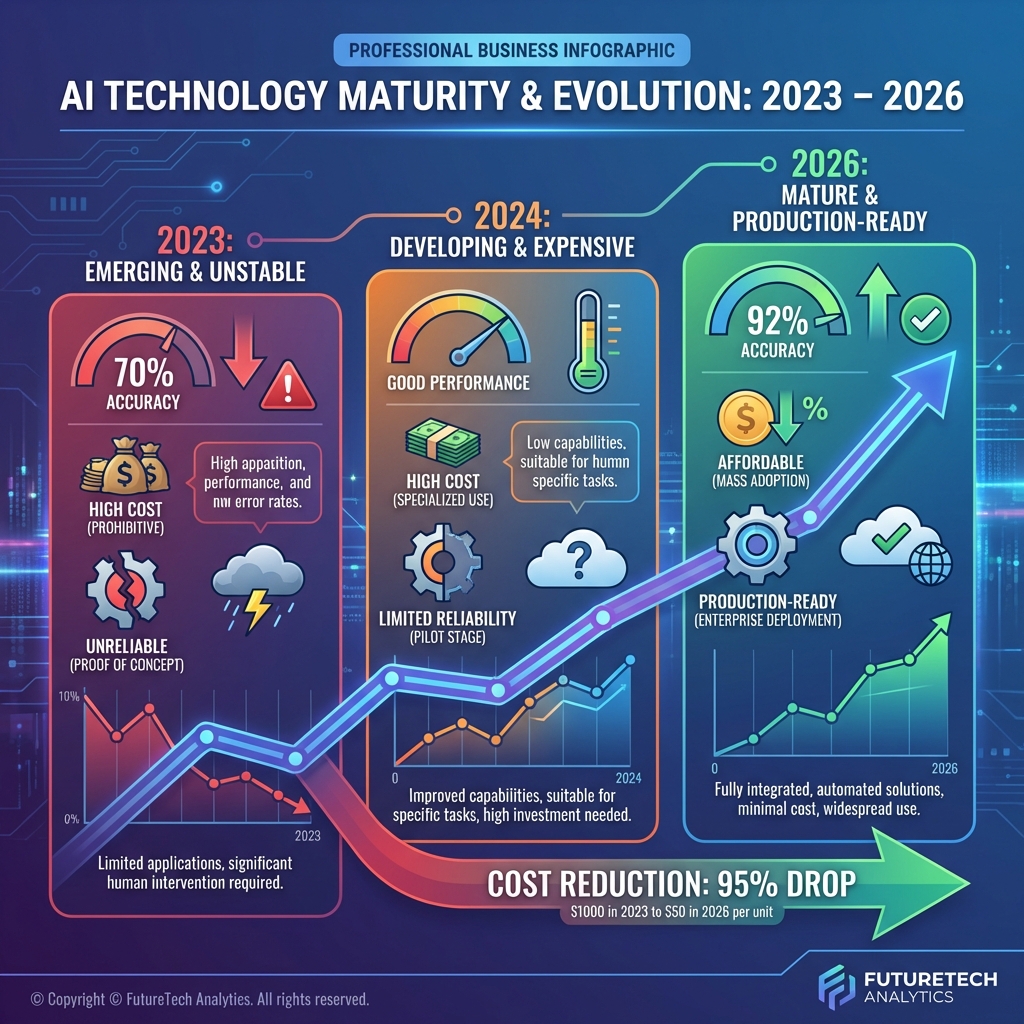
Factor 1: Technology Maturity - LLMs have crossed the capability threshold. 2026 models like Claude 3.5 Opus provide 92%+ accuracy on complex business tasks (up from 70% in 2023). Cost has dropped 95% making scale economically viable.
Factor 2: Proven ROI - Real companies achieving real results. Financial services use case: Insurance claim processing agent handling 10,000 claims/month. $370K monthly savings = $4.4M annually. Payback: 2.3 months.
Factor 3: Competitive Pressure - Companies deploying now achieve 2-3 year competitive leads. First-mover advantages compound. The window is 2026-2027. By 2028, late adopters pay premium prices in saturated markets.
Enterprise Use Cases By Department
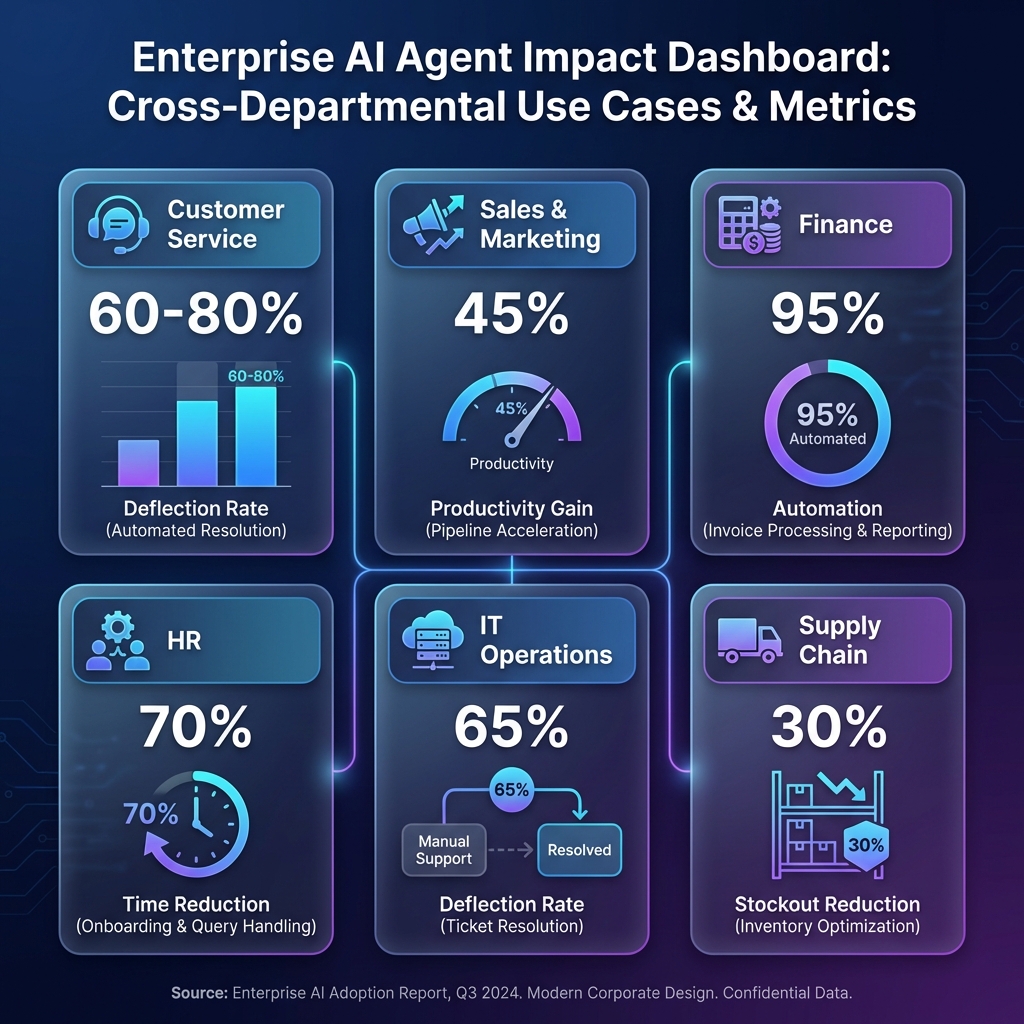
Customer Service: Tier 1 support automation achieving 60-80% ticket deflection. Impact: $500K-$2M annually. 24/7 availability improves customer satisfaction.
Sales & Marketing: Lead qualification and scoring. Agent analyzes company firmographics, behavioral signals, intent data. Impact: 45% increase in sales productivity. 3x higher response rates on personalized outreach.
Finance & Accounting: Invoice processing and AP automation. 95% automation rate, 80% cost reduction per invoice. 10-day financial close → 3-day close.
Human Resources: Recruitment screening with 70% time reduction. Employee onboarding improving time-to-productivity by 40%. HR policy assistant deflecting 60% of routine inquiries.
IT Operations: Level 1 help desk automation achieving 65% ticket deflection. System monitoring with automated remediation reducing MTTR by 80%.
Supply Chain: Demand forecasting and inventory optimization. 30% reduction in stockouts, 25% reduction in excess inventory. Supplier performance monitoring improving on-time delivery by 20%.
The Implementation Roadmap: 6-9 Months to Production
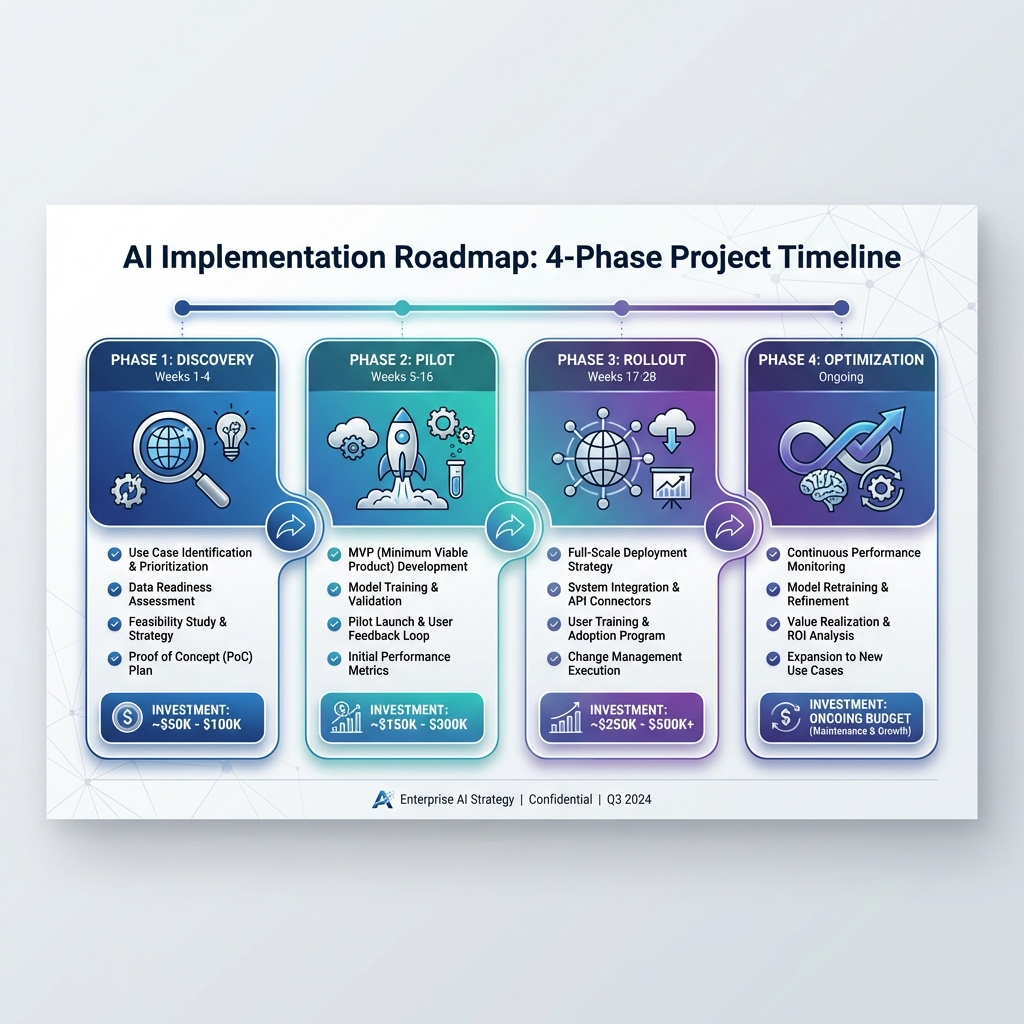
Phase 1: Discovery & Strategy (Weeks 1-4) - Process analysis, use case prioritization, business case development. Investment: $50K-$150K. Deliverable: Prioritized roadmap and executive approval.
Phase 2: Pilot Implementation (Weeks 5-16) - Detailed design, development, integration, testing, limited production rollout. Investment: $150K-$400K. Deliverable: Working agent in production with measured results.
Phase 3: Full Rollout (Weeks 17-28) - Preparation, phased deployment, stabilization. Investment: $100K-$300K. Deliverable: Agent at full scale, documented ROI achievement.
Phase 4: Optimization & Expansion (Ongoing) - Continuous improvement and expansion to additional use cases. Build internal AI agent competency.
Costs & ROI Framework
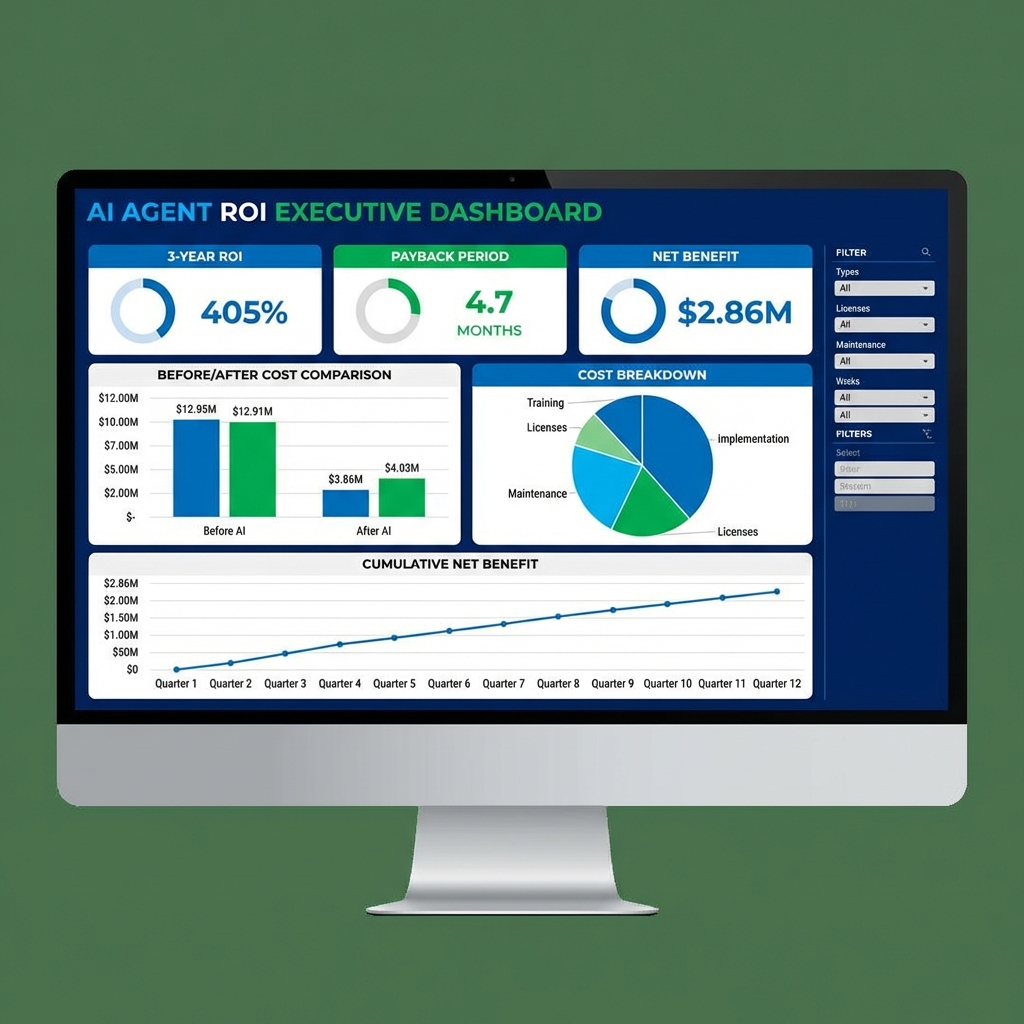
Implementation Costs (One-Time): $220K-$900K depending on project size. Small (single department): $220K-$400K. Medium (multiple departments): $400K-$700K. Large (enterprise-wide): $700K-$2M+.
Ongoing Operational Costs (Annual): $80K-$500K. Includes LLM API costs, infrastructure/hosting, maintenance & support. Typically 15-25% of implementation cost annually.
Sample ROI: Customer Service Agent for Mid-Size SaaS Company
- Implementation: $350K (one-time)
- Ongoing: $120K/year
- Benefits: $1.2M annually (labor savings + retention + 24/7 availability)
- Year 1 ROI: 155%
- 3-Year Total: $2.86M net benefit, 405% ROI
- Payback Period: 4.7 months
Common Pitfalls & How to Avoid Them
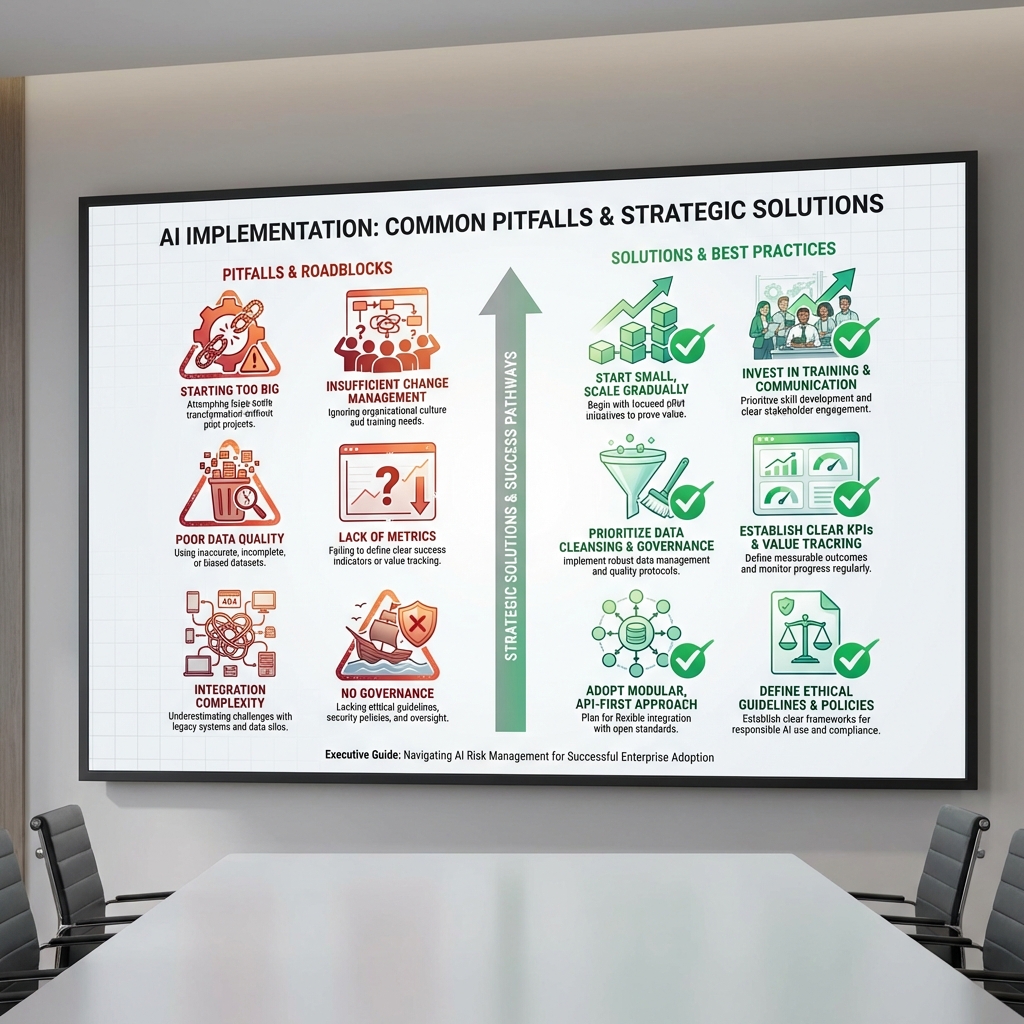
60% of AI projects fail to achieve ROI goals. Here's why and how to avoid it:
- Pitfall 1: Starting Too Big - Companies try to deploy enterprise-wide simultaneously. Fix: Start with ONE high-value use case. Prove it. Then expand.
- Pitfall 2: Insufficient Change Management - Employees won't use it due to fear/distrust/friction. Fix: Invest 25-30% of budget in change management. Involve users in design.
- Pitfall 3: Poor Data Quality - Garbage in = garbage out. Fix: Audit data quality BEFORE starting agent development. Clean critical data.
- Pitfall 4: Lack of Clear Success Metrics - Can't measure success. Fix: Define 3-5 specific metrics BEFORE starting. Track baseline and targets.
- Pitfall 5: Underestimating Integration Complexity - Legacy systems, authentication, data formats. Fix: Allocate 40-50% of dev time to integration.
- Pitfall 6: No Governance or Oversight - AI makes mistakes. Fix: Implement human-in-the-loop for high-risk decisions. Set up monitoring dashboards.
Build vs Buy vs Partner
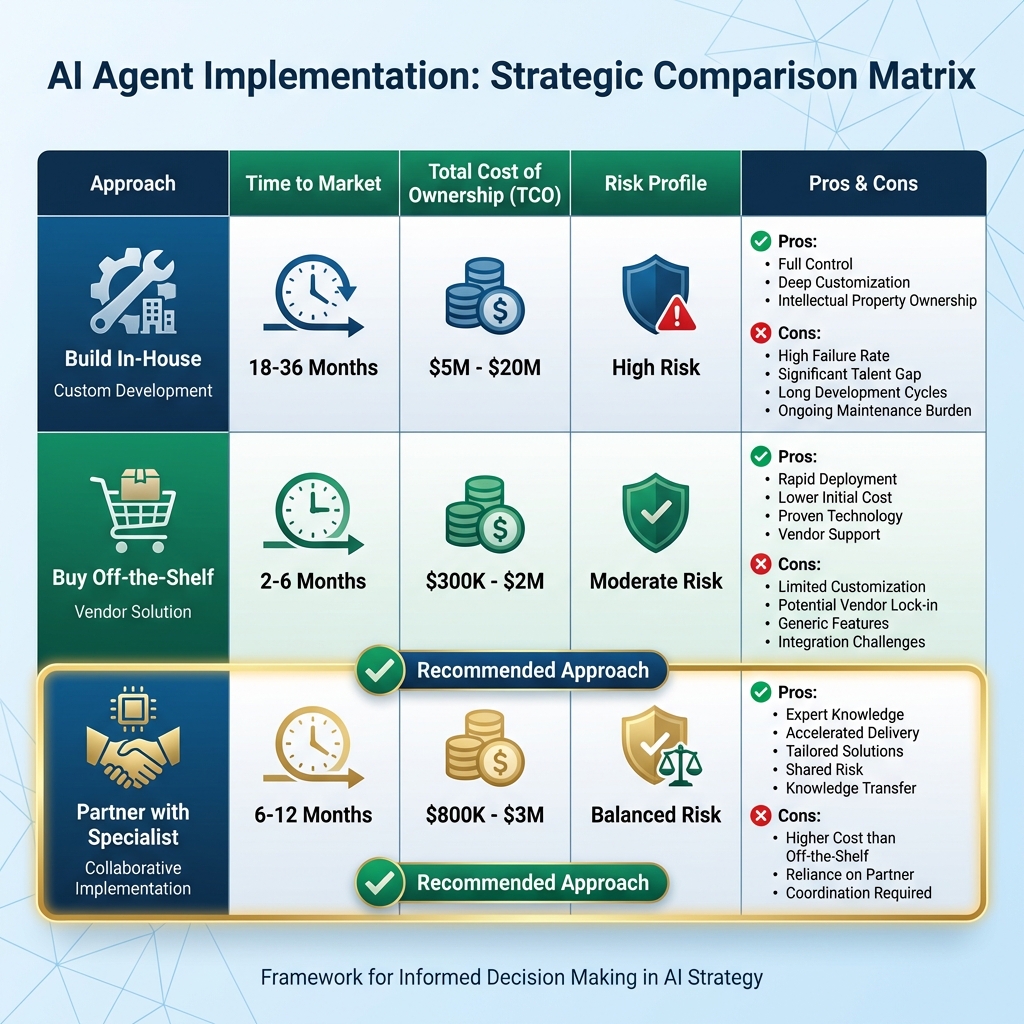
Build In-House: Best for large enterprises (5,000+ employees) with strategic differentiators. Timeline: 18-36 months. Cost: $5M-$20M over 3 years. High risk.
Buy Off-the-Shelf: Best for common use cases with low customization needs. Timeline: 2-6 months. Cost: $300K-$2M over 3 years. Limited customization.
Partner With Implementation Specialist (RECOMMENDED): Best balance of speed, cost, customization, and risk. Timeline: 6-12 months. Cost: $800K-$3M over 3 years. Builds internal knowledge while leveraging external expertise.
Why NovaEdge Digital Labs?
What Makes Us Different:
- Implementation Focus - We build production-ready systems, not PowerPoint decks
- Cross-Industry Experience - Financial services, healthcare, manufacturing, professional services, retail
- Technology Agnostic - Objective recommendations based on YOUR needs, not vendor partnerships
- End-to-End Capability - Single partner from strategy to production (no handoffs)
- Proven Methodology - Compressed 18-month timelines to 6-9 months with proven frameworks
- Transparent Pricing - Fixed-price options: $375K-$1M typical range. Or time & materials at $200-$300/hour
Getting Started
Your AI agent journey starts with a conversation.
Free 60-Minute Strategy Session: We'll discuss your specific challenges, explore potential use cases, explain our methodology, and provide honest assessment of fit. No obligation. No sales pressure.
Three Ways to Start:
- Schedule a Strategy Session - Free for qualified enterprises (200+ employees)
- Download AI Agent Readiness Assessment - 20-question self-assessment with immediate results
- Review Complete Implementation Guide - 60-page PDF with frameworks, templates, and case studies
The AI Agent Imperative
We're at an inflection point in enterprise software. The data is undeniable:
- 79% of organizations already deploying AI agents
- 40% of enterprise apps will embed agents by end of 2026
- $50 billion market by 2030
- 300-800% ROI for well-executed implementations
Companies that move decisively in 2026-2027 will: Reduce operational costs 40-70%. Improve customer satisfaction 30-50%. Accelerate revenue growth 20-40%. Build 5-10 year competitive moats.
Companies that wait will: Watch competitors pull ahead. Pay premium prices in saturated market (2028+). Struggle to catch up as experience gap compounds. Face existential threats from AI-native disruptors.
The window is now.
But success isn't automatic. 60% of AI projects fail to achieve ROI goals. You need a partner who's done this before.
NovaEdge Digital Labs has guided dozens of enterprises through successful implementations. We've compressed T18-month timelines to 6-9 months. We've achieved ROI exceeding projections by 40%+. We've avoided the pitfalls that derail 60% of projects.
The question isn't whether AI agents will transform your business. The question is whether you'll lead the transformation or be transformed by your competitors.
Let's build your AI agent roadmap together.Schedule Your Free Strategy Session
About NovaEdge Digital Labs
NovaEdge Digital Labs is a specialized AI implementation consultancy helping mid-market and enterprise companies deploy production-grade AI agents that deliver measurable business value.
We don't just strategize—we build, integrate, and deploy AI systems that work.
- AI Agent Strategy & Roadmapping
- Custom AI Agent Development
- Enterprise Integration & Deployment
- Change Management & Training
- Ongoing Optimization & Support
Industries: Financial Services | Insurance | Healthcare | Manufacturing | Professional Services | Retail | Technology
Markets: 🇺🇸 United States | 🇬🇧 United Kingdom | 🇦🇪 UAE (Dubai)
Contact: enterprise@novaedgedigitallabs.techVisit NovaEdge Digital Labs
Built & Curated by Amit Kumar Raikwar
Full-stack engineer & product designer shipping production software worldwide.
Frequently Asked Questions
Amit Kumar Raikwar
Full-stack engineer and product designer in Indore. I take software from an empty Figma file to a live product that takes payments, and I do the interface, the API, the database and the deploy myself.